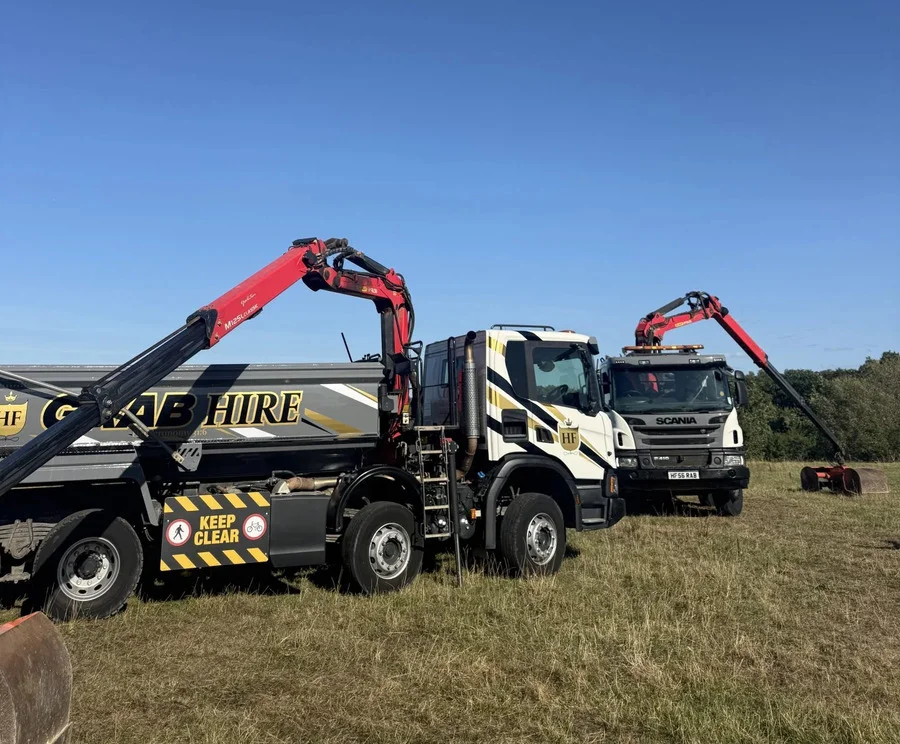
If overhead power lines cross your proposed grab lorry loading area, flag them before booking. The crane can come close to a line before the bucket arrives at the pile, and electricity can arc across a gap. Send the operator the full layout and agree a suitable loading position before committing to the collection.
Overhead power lines and the grab lorry crane
A lorry can fit through the gate while its operating area remains unsuitable. Think about every place the crane and bucket could pass as the driver lifts from the ground, rotates towards the body and releases the load. A cable along the edge of the plot can affect part of that movement even when the soil itself sits under open sky.
HSE’s guidance on overhead power lines puts avoiding the danger first. When a risk remains, the electricity network operator and the people responsible for the work need to agree suitable controls. Treat unidentified lines as live and leave cable identification and clearance decisions to the appropriate people.
What photos to send before booking
From a safe place at ground level, take a wide shot that shows the proposed standing area, pile, gate, road and poles together. A second shot across the plot can help the operator see whether the line crosses the lifting area or only looks as though it does from one viewpoint. Include a simple site sketch if the route is difficult to show.
Send the site address, the material being collected and any alternate loading positions. Include trees, parked vehicles, steep ground and structures that limit where the lorry can stand. Mention gates that must remain open and whether other trades will be using the entrance. Avoid estimating the height of a cable or trying to measure it yourself.
Can the spoil move to a clearer spot?
On an extension job, spoil may end up under a service cable at the front gate. A second position farther along the boundary could let the vehicle stand and the crane operate away from the line. That depends on the available ground, who controls it, and how people will get around the vehicle. Have the operator check the alternative before moving the pile. If repositioning it would itself require machinery near the line, that work also needs its own safe plan.
Looking for grab hire, muck away or material delivery near you?
Explore the areas where HF Grab Hire works:
Plan for people and moving vehicles
Agree how workers and visitors will get past the site without crossing the loading area or the lorry’s approach. Where practical, use a separate entrance or time the collection between other vehicle movements. In 2025/26, HSE recorded 24 workers fatally struck by moving vehicles across Great Britain. That figure covers all industries. HSE work-related fatal injury statistics.
What if the line looks like a phone cable?
Its appearance is not enough to identify it. Electricity and telecoms services can share poles or follow a similar route, and a cable may look insulated without being safe to approach. Include it in the photos and tell the operator what you know about it. If the owner cannot be identified or clearance cannot be agreed, treat that loading option as unavailable. Plan the visit around a suitable alternative or get advice from the network operator before proceeding.
When to postpone the collection
If there is no agreed safe position, pause the booking and discuss a different collection method or revised site layout. On the day, point out any changes since the photos. A vehicle in the standing area, a moved pile or a blocked entrance can alter the plan. Keep the crane stowed until the operator is satisfied that the work can proceed safely.
Summary
Show the operator the full loading area and all overhead lines. Agree a suitable position before moving the pile or arranging the collection.